

The USS Gerald R. Ford, the largest aircraft carrier in the world participating in the war with Iran, has returned for repairs to the Souda Bay naval base in Crete. The ship, which had been replenished with food, fuel, and ammunition in Souda last February to participate in military operations in Iran, reported a fire in the laundry area on March 12, which injured two crew members.
30 hours to extinguish
Notably, it took more than 30 hours to extinguish the blaze. According to reports in American media, the US Navy is investigating whether the fire on the aircraft carrier was intentionally set by American sailors, who cite exhaustion due to months at sea.
Sabotage
If proven to be deliberate sabotage, serious questions will arise regarding the morale of the American sailors participating in the war. It is worth noting that the Ford's mission at sea has already been extended twice.
On mission since June 2025
The USS Gerald R. Ford has been on mission since last June, when it departed from its base in Norfolk for the Mediterranean. It was later sent to the Caribbean last October by US President Donald Trump, as he was bolstering American military forces near Venezuela. The USS Gerald R. Ford also participated in Operation Absolute Resolve during the first week of January, alongside the USS Iwo Jima, an operation that led to the arrest of Venezuelan President Nicolas Maduro. The initial mission of the USS Gerald R. Ford was set to conclude in the last week of December. However, its redeployment to the Caribbean resulted in this schedule not being met. The crew then expected to return home in early March. The second extension means the crew likely will not be able to return before early April.
The investigation
Information indicates that the US Navy is investigating the possibility that sailors on the USS Gerald R. Ford intentionally started the fire that broke out on March 12 in the carrier's main laundry facilities. The investigation explicitly examines the possibility of deliberate sabotage by crew members, with one theory suggesting the fire may have been caused to interrupt the ship's long and repeatedly extended mission. The Ford has now entered its tenth month of deployment, with the crew informed that their mission will likely be extended until May — approximately double the duration of a standard carrier deployment. Last month, it was reported that the USS Gerald R. Ford was not fully prepared for deployment in the war with Iran.
Necessary repairs
It was noted that the repeated mission extensions not only exhaust the sailors and affect morale but also delay the scheduled transfer period to Virginia, where significant upgrades and repairs were to take place. The aircraft carrier was set to undergo a major period of maintenance and reconstruction at the Newport News Naval Shipyard in Virginia earlier this year. Even if the fire was not intentional, the continuous mission extensions, the strain on its complex systems, and the delay in maintenance and upgrades may have also contributed to the incident. In addition to the loss of valuable military systems, the war is also putting great pressure on the finances of the United States.
The Iranian drone attack
The "Gerald R. Ford" is one of two American aircraft carriers sent by Trump to the war with Iran. Like the other carrier, the USS Abraham Lincoln, it was forced to leave the "battlefield" prematurely. On March 17, American newspapers reported that a large fire had broken out on the ship, burning for days. The New York Times did not report malicious intent on the part of the sailors but noted that dozens of crew members suffered poisoning, while hundreds "lost their beds and were forced to sleep on floors and tables, under difficult conditions, without access to laundry." CENTCOM, for its part, stated that the fire "did not cause damage to the ship's propulsion system and that the aircraft carrier remains fully operational."
In reality, the laundry fire version is reminiscent of CENTCOM's recent announcement of "technical malfunctions" in two refueling aircraft in western Iraq, which led to the crash of a KC-135 Stratotanker (resulting in the death of six people), while the second, with severe tail damage, barely managed to land at an airport in Israel. According to the same version, both aircraft were shot down by pro-Iranian forces. A similar story seems to have unfolded in the case of the "Gerald R. Ford." Here is what independent journalist Jonas E. Alexis stated: On March 11, an Iranian Shahed-136 drone breached the defensive perimeter of the USS Gerald R. Ford strike group in the Persian Gulf. The drone cost $20,000, while the aircraft carrier it struck is valued at $13 billion. That is a cost-to-value ratio of 650,000 to 1.
The Aegis radar
The drone was flying at an altitude of 15 meters above the sea surface, below the detection threshold of the Aegis radar systems, which are designed to track ballistic missiles. Within 14 minutes, it covered 47 nautical miles and struck the control area near the refueling station. The impact caused a fuel fire that spread to adjacent compartments. More than 400 sailors were evacuated, and flight operations were suspended. The carrier "Ford" was ordered to move more than 200 nautical miles away from the Iranian coast. This is the first time since the Vietnam War that an American aircraft carrier has reportedly been forced to withdraw due to enemy fire.
The USS Gerald R. Ford is the newest American aircraft carrier and was commissioned in 2017. It is protected by the Aegis combat system, a complex of radars, computers, and missiles worth about $4 billion, designed to create a powerful defensive "umbrella." However, Aegis presents a critical weakness: it struggles to reliably detect small, slow-moving targets flying at very low altitudes above the sea. Low-altitude flights exploit radar interference from waves and sea foam. The Shahed-136 was flying at 15 meters at a speed of about 185 km/h. Although Aegis can detect ballistic missiles at distances of up to 1,000 kilometers, it struggles with drones moving slowly and low over the sea. The drone hit an area near Elevator #3, damaging fuel lines carrying thousands of gallons of aviation fuel. The fire was brought under control; however, assessments showed serious destruction to fuel transfer equipment and damage to storage areas. The repair cost is estimated between $800 million and $1.2 billion, with a restoration time of 3 to 6 months. With an expenditure of just $20,000, Iran reportedly caused damage reaching $1 billion and temporarily disabled a strategic asset worth $13 billion.
It wasn't just one drone…
It wasn't just one drone. Iran launched over 30 drones in a coordinated attack. Most were intercepted, but one got through. One was enough. Iran can manufacture hundreds of Shahed-136 drones. If Iran launches 100 drones simultaneously, perhaps 90 will be intercepted. But 10 will get through. And if 10 drones hit an aircraft carrier, the damage will be catastrophic. The US Navy chose to retreat rather than risk additional attacks (end of quote). It is reminded that another aircraft carrier, the USS Abraham Lincoln, also retreated away from the Iranian coast. This happened at the start of the war after it was attacked by four ballistic missiles. Tehran announced that the ship, anchored 340 meters from the coast, suffered severe damage from a combined attack with drones and ballistic missiles. The Pentagon denied these claims but acknowledged the attack occurred and that sailors repelled it.
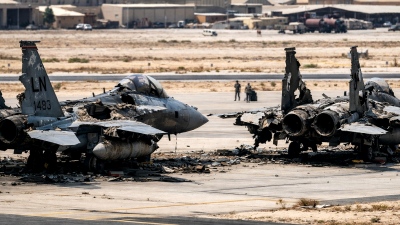
The USS Abraham Lincoln is currently in the Indian Ocean, nearly 1,000 km from Iran. This creates significant challenges for aircraft and missile missions. The combat radius of F/A-18F Super Hornet fighters operating from carriers during strike missions is approximately 720–750 km. After taking off for a mission, the aircraft can perform a strike, but to return to the carrier deck, it will need aerial refueling. This requires support from tankers like the KC-135 Stratotanker. And here lies the problem. The Americans, as mentioned, lost not only two tankers in the airspace over Iraq but also five aircraft at the "Prince Sultan" airbase in Riyadh. On March 13, the Iranians launched a targeted missile attack on the Saudi Arabian airport. The Americans stated then that the aircraft "required extensive repairs." According to military experts, by the start of the war, the US Air Force had 6–8 tankers in the Middle East. Three weeks of war have shown that the Americans have suffered serious losses both at sea and in the air. Western media do not report these losses, but that does not mean they are not real.
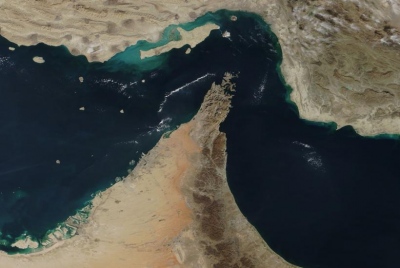
It is not surprising that, following such developments in the theater of operations, Britain, France, and Germany refused to send naval forces to the Middle East to support their NATO ally with fire. Furthermore, they do not intend to participate in the operation to "liberate" the Strait of Hormuz, which Trump announced a few days ago. The US has 12 aircraft carriers, while France has one and Britain has two — which explains their stance. Latest news: US Navy leadership plans to transfer 1,000 sailors from the under-construction carrier "John F. Kennedy" to Crete. The exhausted crew of the "Gerald R. Ford" needs replacement.
www.bankingnews.gr







Σχόλια αναγνωστών